
Have you ever noticed a garage door slam down unexpectedly or refuse to budge at all? There’s a good chance spring was the reason. But not all springs are made the same, and the debate between torsion and extension springs comes up constantly among homeowners trying to figure out which system holds up better over time.
Two Different Ways of Doing the Same Job
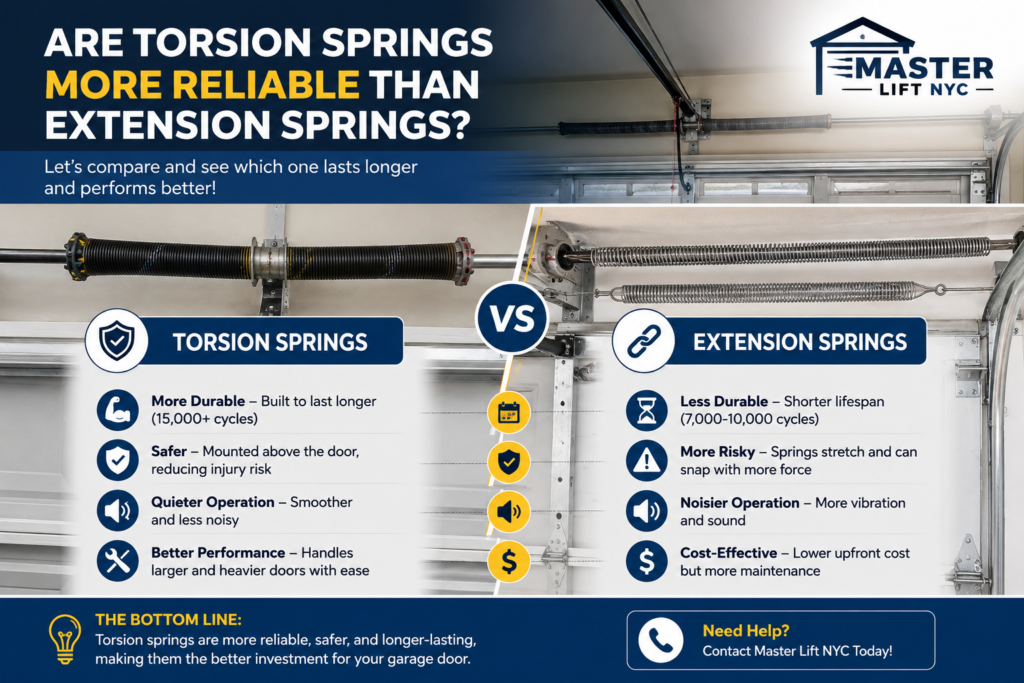
Both spring types counterbalance the weight of your garage door, but they go about it very differently. Torsion springs sit horizontally above the door opening and twist to store energy.
But extension springs run along the horizontal tracks on either side of the door and stretch to create tension. That structural difference is the reason one system tends to age far more gracefully than the other.
Why Torsion Springs Tend to Win Out
Torsion springs are generally engineered to handle more cycles before wearing out, often lasting somewhere in the range of 15,000 to 20,000 open-and-close cycles rather than the 5,000 to 10,000 cycles typical of extension springs. Because they twist rather than stretch, the wear is distributed more evenly across the coil, which means less metal fatigue over time. They offer smoother, more controlled movement, since the door lifts with a consistent counterbalance rather than relying on stretched tension that can fluctuate as the spring ages.
Where Extension Springs Fall Short
Extension springs aren’t necessarily a bad choice, but they do come with some real drawbacks. They stretch and contract with every cycle, and are more prone to sagging, overstretching, and eventual snapping, especially without safety cables in place.
When an extension spring fails, it can release with enough force to send metal fragments flying, which makes it a genuine safety concern. This is one of the reasons so many calls for broken garage door spring repair trace back to worn or failed extension springs rather than torsion ones.
Reliability Isn’t Just About Lifespan
It’s worth remembering that reliability isn’t only limited to how long a spring lasts. It’s about how predictably it fails and how much warning you get beforehand. Torsion springs show gradual signs of wear, like a door that feels heavier to lift or doesn’t sit level. They give homeowners a window to identify the problem before it becomes an emergency.
Extension springs, on the other hand, often fail more abruptly and leave less room to react before broken garage door spring repair becomes urgent rather than routine.
What This Means for Your Garage Door
If you’re weighing which system makes more sense for your home, torsion springs come out ahead on durability, safety, and long-term cost, even though the upfront installation tends to be pricier.
That said, the right choice depends on your door’s weight, your garage’s structural setup, and how the original system was installed. A poorly installed torsion spring can underperform just as easily as a well-maintained extension spring can hold up much longer than expected.
Getting the Right Assessment
Rather than guessing which spring type your door needs or waiting for a failure to force the decision, it’s worth having a professional take a look at your existing setup. Master Lift NYC can assess your garage door system, explain what’s driving your wear patterns, and recommend whether a torsion upgrade or a simple repair makes the most sense for your home.