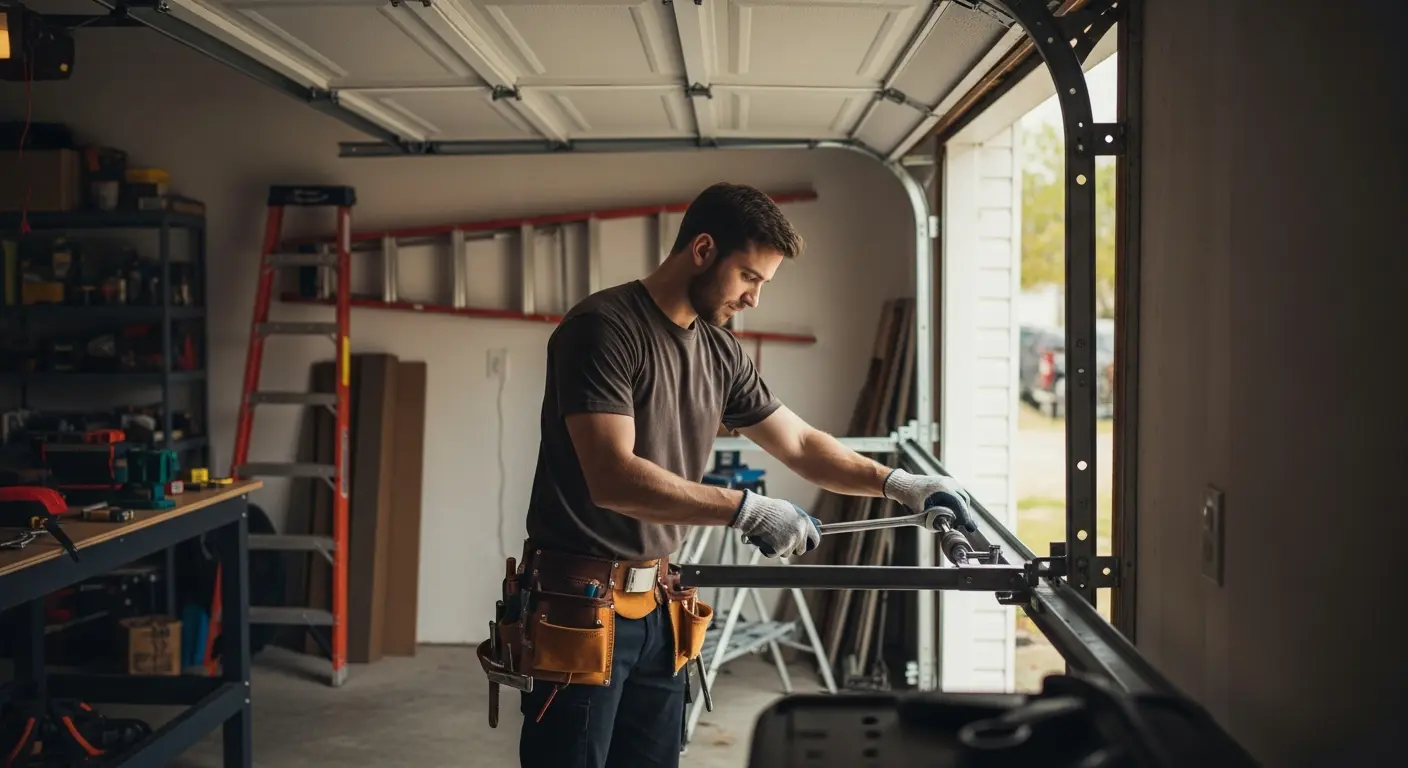

If you’ve recently invested in garage door installation in Long Island, you probably expect your new garage door to operate smoothly through every season. However, many homeowners throughout Nassau County and Long Island are surprised when a recently installed garage door becomes slow, noisy, or difficult to open after the first cold spell.
If your garage door feels unusually heavy, sticks while opening, or doesn’t seal properly against the floor, winter weather may be exposing issues that weren’t noticeable during warmer months. Fortunately, most of these problems can be corrected before they lead to costly repairs.
Is It Really the Cold Weather?
Cold temperatures alone rarely damage a properly installed garage door. More often, winter conditions reveal installation or adjustment issues that were already present but weren’t obvious in mild weather.
As temperatures drop, metal tracks naturally contract, lubricants become thicker, rubber weather seals stiffen, and springs respond differently under colder conditions. A professionally installed garage door is designed to compensate for these seasonal changes. However, even small installation errors can become noticeable once winter arrives.
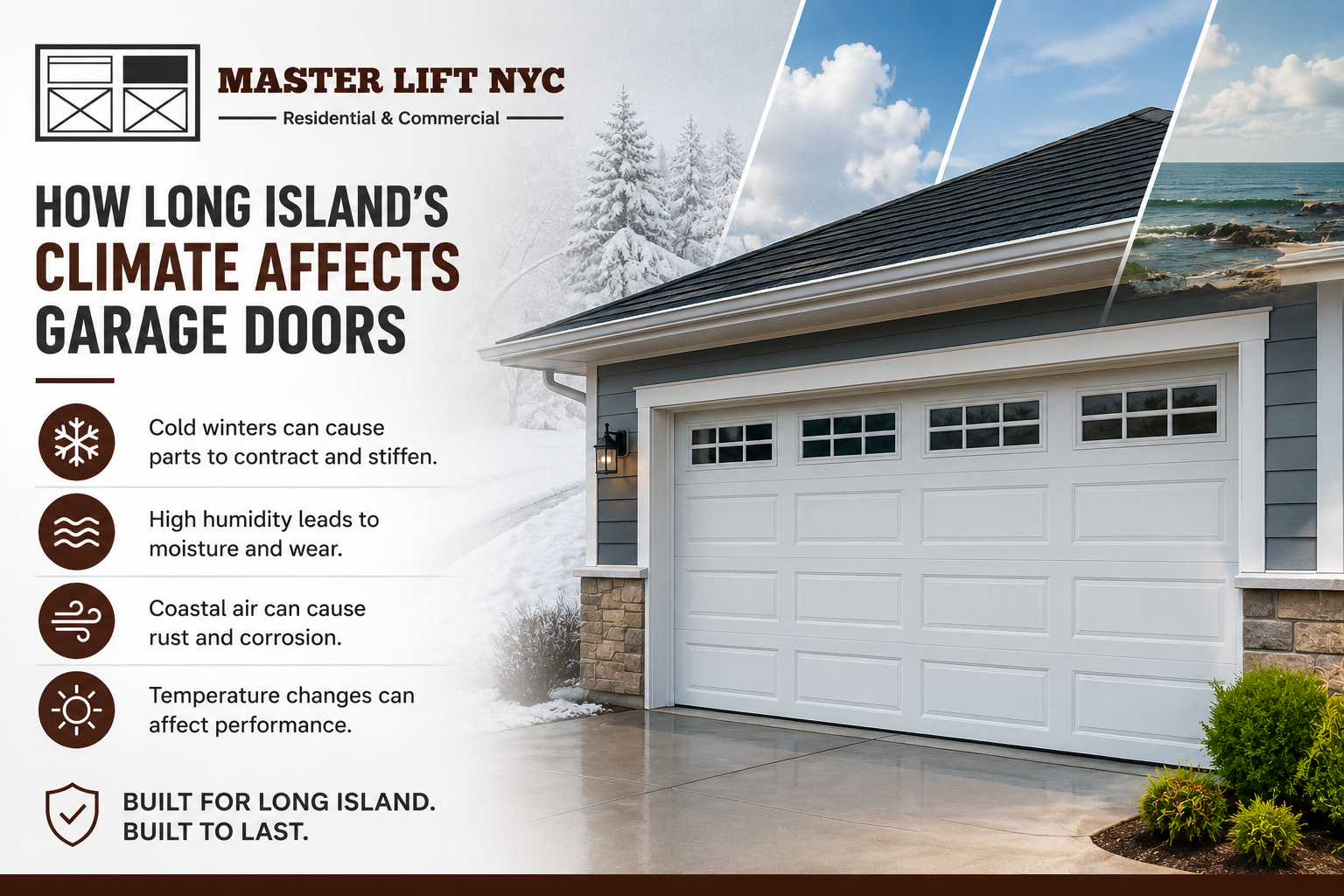
How Long Island’s Climate Affects Garage Doors
Long Island winters create unique challenges for residential garage doors. Homeowners throughout Nassau County, the North Shore, and the South Shore experience freezing temperatures, high humidity, coastal salt air, and rapid weather changes throughout the season.
Moisture can collect inside rollers, hinges, and bearings before freezing overnight, causing stiffness, squeaking, or grinding noises. Homes located closer to the coast are also exposed to salt air, which accelerates corrosion on unprotected metal components.
These regional conditions are one reason why garage door installation in Long Island should include high-quality hardware, weather-resistant materials, and professional adjustments designed specifically for our local climate instead of generic installation methods.
Common Reasons a New Garage Door Struggles During Winter
Several issues commonly appear after a new garage door installation when temperatures begin to fall.
Under-Lubricated Rollers and Hinges
Standard grease can become thick in freezing temperatures, making rollers and hinges move less efficiently. A professional-grade silicone lubricant designed for cold weather helps keep the door operating smoothly.
Improper Spring Tension
Garage door springs should be carefully calibrated during installation. If spring tension isn’t adjusted correctly, colder temperatures can make the door feel heavier, slower, or uneven while opening and closing.
Weatherstripping Gaps
Even small openings around the bottom or sides of the garage door allow cold air and moisture to enter. Water can freeze beneath the bottom seal, preventing the door from opening properly and reducing your home’s energy efficiency.
Opener Force and Safety Settings
Temperature changes can slightly affect track alignment and door balance. As a result, your garage door opener may hesitate, reverse unexpectedly, or stop before fully closing.
Minor Track Misalignment
Small alignment issues that go unnoticed during warmer months often become more obvious during winter. Even slight shifts can increase friction and place additional strain on your garage door opener.
What Professional Garage Door Installation Should Prevent
A properly completed garage door installation in Long Island should minimize these seasonal problems from the beginning.
Professional installation includes:
- Precise track leveling
- Proper spring calibration
- Correct door balancing
- Weather-resistant seals
- High-quality rollers and hardware
- Accurate garage door opener adjustments
When a new garage door begins having problems shortly after installation, the cause is often related to installation quality, hardware selection, or improper adjustments rather than a defect in the door itself.
Working with an experienced garage door company serving Long Island helps ensure your system is prepared for local weather conditions from day one.
How to Keep Your New Garage Door Working Through Winter
If your garage door has started acting up, there are several simple things you can check before the problem becomes worse.
- Apply a cold-weather silicone lubricant to rollers, hinges, and bearings.
- Inspect the weatherstripping for gaps, cracks, or ice buildup.
- Remove snow and ice from around the bottom seal.
- Verify that your garage door opener is operating normally.
- Listen for unusual grinding or squeaking noises.
- Watch for uneven movement while the door opens or closes.
If the problem continues, it’s best to have a professional inspect the spring tension, track alignment, rollers, and opener settings before additional wear occurs.
Why Homeowners Throughout Long Island Choose Master Lift NYC
At Master Lift NYC, we provide professional garage door installation, garage door repair, garage door spring replacement, garage door opener repair, and garage door maintenance for homeowners throughout Nassau County, Long Island, Queens, and the Bronx.
Our technicians understand how local weather affects garage door systems and perform detailed inspections to ensure every component operates safely and efficiently throughout the year. Whether your garage door needs a minor adjustment or a complete installation review, we’ll identify the problem and provide reliable, long-lasting solutions.
If your new garage door isn’t performing the way it should this winter, contact Master Lift NYC today to schedule a professional inspection and keep your garage door operating smoothly all season long.
Frequently Asked Questions
Why won’t my new garage door open during winter?
Cold temperatures can affect springs, rollers, lubrication, weather seals, and opener settings. Winter often exposes installation or adjustment issues that weren’t noticeable during warmer months.
Should a new garage door need adjustments after installation?
Minor adjustments are sometimes necessary as materials settle and seasonal temperatures change. A professional inspection helps ensure the door remains properly balanced and operates safely.
Can cold weather damage a garage door opener?
Cold weather rarely damages the opener itself. However, thick lubricants, frozen weather seals, track alignment issues, or improperly adjusted springs can make the opener work harder than intended.
How often should I service my garage door in Long Island?
Most garage doors should receive professional maintenance at least once each year. Scheduling a service visit before winter is one of the best ways to prevent seasonal problems and extend the life of your garage door system.